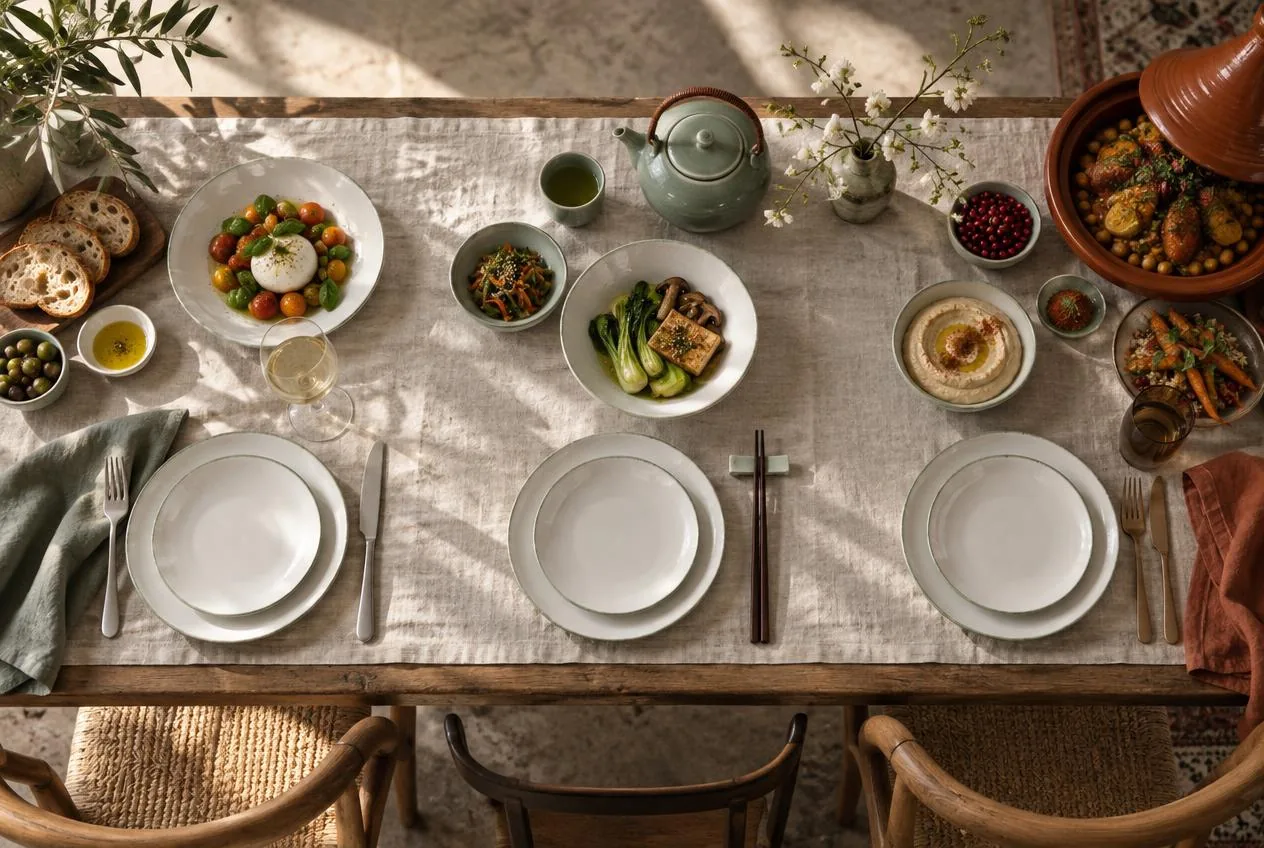
Middle East hospitality buys ceramics the way it runs banquets: at scale, with presentation as a stated requirement, and with replacement planning that treats breakage as a cost of doing business rather than a surprise. This guide sets out what Gulf hotel, catering and banquet programs actually order — large formats, gold-rim presentation, reinforced hotel bodies — and how to specify, test and budget a volume program that survives both the dish machine and the tender committee.
What Gulf hospitality programs order
The demand profile concentrates where the region's hospitality culture concentrates: banqueting, hotel dining and the tea-and-coffee occasions that anchor Gulf entertaining. In practice that means three product families. First, hotel porcelain — reinforced bodies engineered for commercial washing and stacking, specified in program formats such as 24-piece configurations at a typical 1000-piece MOQ, covering the daily service floor of the property. Second, presentation porcelain for occasions: bone china with gold-rim decoration in large configurations — 56-piece sets are the format we build most often — where the register is celebration, and the buyer expects the box to look like the occasion it serves. Third, tea and coffee service: teapots, coffee pots and matching cups at banquet scale, where the region's hospitality ritual makes these pieces volume items rather than boutique ones.
Two format preferences run through all three families. Large formats — generous platters, wide-rim plates, tall bowls — serve communal dining, which is the default mode of Gulf hospitality, and they also photograph the way banquet catalogs need them to. And presentation decoration concentrates on the rim: gold lines and classic borders that read at table distance, applied overglaze, specified with explicit wear expectations and care instructions agreed at the golden-sample stage. Overglaze precious-metal decoration is a luxury register, not a scrub register — the programs that treat it that way keep their banquet rooms looking right for years, and the ones that do not discover the difference in quarter two.
Specifying for the dish machine, not the mood board
Beautiful banquet porcelain that cannot survive a commercial dish machine is a leasing program for your replacement budget. The durability specifications that matter are physical, and a serious tender will probe each of them. Body: reinforced hotel porcelain rather than retail-grade bodies, with high-temperature firing — fine porcelain fired at 1280-1380°C vitrifies hard, resists chipping at rims and stacking contact points, and holds glaze luster through repeated commercial cycles. Form: edges and foot rims engineered for stacking, because banquet storage is vertical storage. Glaze: sealed color systems, with underglaze where the design allows, because decoration sealed beneath the glaze is structurally the most wash-durable route. And packing: piece-by-piece protection, corner-protected palletized loads and container loading plans, because a 5-8% breakage rate without professional packaging is the industry baseline — and at container volumes, that percentage is a budget line, not a rounding error.
The specification that hotel buyers most often forget until year two is the replacement buffer. Volume programs consume ceramics at a predictable rate, and the properties that plan a buffer — a standing reorder of high-attrition SKUs rather than emergency spot purchases — keep pattern consistency across the dining room, because the buffer is produced on the same molds and glazes as the original program. A program bought once and never reordered converges toward mismatch, one chipped plate at a time.
Compliance: the file behind the tender
Hospitality tenders increasingly ask for food-contact documentation alongside price and finish samples, and the benchmarks they reference are the ones the global supply chain already runs on: migration limits under EC 84/500/EEC and the FDA's 21 CFR 109.16, tested in 4% acetic acid by third-party labs using methods such as ASTM C738. We supply migration test reports against the standard the tender names, on the decoration actually shipped, and we quote the testing scope before sampling so the tender timeline survives contact with the lab calendar. For gold-rim and decorated banquet lines, the testing question deserves extra care — the report must cover the shipped decoration, not a plain reference body, because decoration is where migration risk lives.
Duty and delivery: confirm per destination
The Gulf is not a single customs territory, and it is not covered by the EU, UK or US trade-remedy regimes that dominate China-origin tableware headlines — each destination applies its own import schedule, which we confirm per consignment with the importing party's broker rather than generalizing across the region. The regimes that do dominate the category's trade discussions are tracked on our tariff hub. On delivery, volume programs run on ocean freight in palletized, corner-protected container loads planned around the property's opening or renovation calendar, with air freight reserved for urgent top-ups and replacement emergencies; exact schedules are confirmed per destination and season rather than quoted as generic day counts. Incoterms should be named explicitly on program quotations — DDP where the buyer wants a landed number, FOB where the property's logistics partner handles entry — because at banquet volumes, a misnamed term is a budget variance.
Checklist for a tender-grade program
- Split the program by register: daily-service hotel porcelain, occasion bone china with rim decoration, and tea-and-coffee service — priced and specified separately.
- Write the body spec — reinforced hotel porcelain, high-temperature firing — into the tender response, not just the catalog photos.
- Agree gold-rim wear expectations and care instructions at the golden-sample stage, before mass production.
- Attach the migration test report to the tender file: EC 84/500/EEC or FDA 21 CFR 109.16 benchmarks, third-party lab, shipped decoration.
- Plan the replacement buffer as a scheduled reorder of high-attrition SKUs, produced on the original molds.
- Name the Incoterm and confirm the destination's duty treatment per consignment with the broker of record.
- Specify packing: piece-by-piece protection, foam-cornered pallets, container loading plan reviewed before loading.
The winning tender response is rarely the lowest number; it is the number whose assumptions are written down — body spec, testing scope, packing standard, replacement buffer, Incoterm. Committees compare assumptions whether or not suppliers state them, and stated assumptions win arguments that unstated ones lose.
Frequently asked questions
Do you supply hotel and banquet programs in the Middle East?+
Yes — hospitality programs are a core service: reinforced hotel porcelain lines, bone china presentation sets and tea-and-coffee service at program MOQs, with testing, packing and duty treatment specified in the quotation. The structure is outlined under the hospitality solution.
How durable is gold-rim decoration in commercial service?+
Precious-metal rim decoration is an overglaze luxury register — it needs wear expectations and care instructions agreed at the golden-sample stage and honored in wash practice. Programs that specify it that way keep their presentation standard; programs that treat it as everyday decoration replace it early.
What MOQ should a hotel program expect?+
Program formats such as 24-piece hotel porcelain configurations typically carry a 1000-piece MOQ, and large presentation sets such as 56-piece bone china run at the same floor. A replacement buffer is planned as a scheduled reorder on the original molds rather than a separate custom run.
Which compliance reports do hospitality tenders ask for?+
Lead and cadmium migration reports to EC 84/500/EEC or FDA 21 CFR 109.16 benchmarks, third-party lab, on the shipped decoration. We quote the testing scope before sampling so the tender timeline holds.
To browse the pieces that anchor banquet and tea service — from teapots to configured hotel lines — start with the catalog, and for a program quotation with body spec, testing and duty named line by line, request a quote.